The Business
A general retail store extending informal credit to a handful of regular business customers, alongside normal walk-in retail sales.
The Problem
The store was profitable on paper every month but regularly short on cash right before payroll. Two causes, once examined: credit customers were taking an average of 45 days to pay despite informal 15-day terms, and inventory buying wasn't adjusted for the store's clear seasonal pattern, leaving cash tied up in slow-moving stock heading into the slower months.
What They Changed
- Set explicit 15-day payment terms in writing for every credit customer, with a follow-up call at day 15
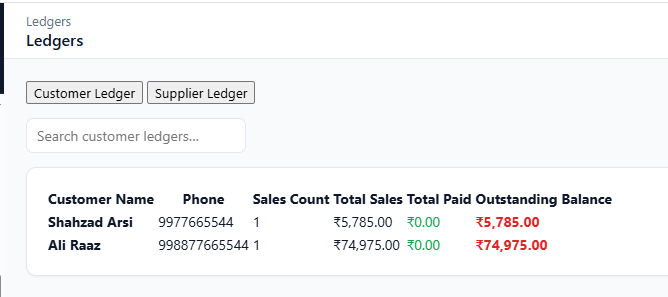
- Introduced a simple aging view so overdue accounts were visible immediately, not discovered by accident
- Reduced inventory purchase volume heading into the historically slower season, based on the prior two years' sales pattern
The Result
Average receivables collection time dropped from 45 to 22 days, and seasonal over-buying was reduced. Together freeing up roughly $11,000 in cash within one quarter, with zero change in sales volume.
See Cash Flow Guide for why profit and cash position are not the same number, and Customer Ledger Explained for the receivables side of this fix.
Could This Apply to Your Business?
- Do you know your average receivables collection time, or just that customers eventually pay?
- Is inventory buying adjusted for seasonal patterns, or fairly constant year-round?
- Have you ever been short on cash in a month that was actually profitable?
FAQ
How can a profitable store still run short on cash before payroll?
Credit customers were taking an average of 45 days to pay despite informal 15-day terms, and inventory buying wasn't adjusted for the store's seasonal pattern, both tying up cash even while the business was profitable on paper.
What was the single biggest lever in freeing up $11,000?
Setting explicit 15-day payment terms in writing with a follow-up call at day 15, which cut average collection time from 45 to 22 days.
Did this require any change in sales activity?
No. The entire $11,000 in freed-up cash came from collecting receivables faster and buying inventory more seasonally, with zero change in sales volume.
Read the Guides Behind This Story
- Cash Flow Guide. the guide behind this story
- Break-Even Analysis Explained. the guide behind this story
- Working Capital Guide. the guide behind this story